AI Operating Systems & Agent Ecosystems

1. The Shift: From Prompting to an OS

What's in this lesson: Explore the architecture behind autonomous AI systems, moving beyond simple chat interfaces to robust, stateful AI Operating Systems.
Why this matters: True autonomous workflows require memory, routing, tool integration (MCP), and secure orchestration.

Modern AI is no longer just a stateless text generator. We are witnessing the evolution of the AI Operating System (OS)β€”a deterministic scaffolding that manages models, tools, and state to execute complex, multi-step tasks.
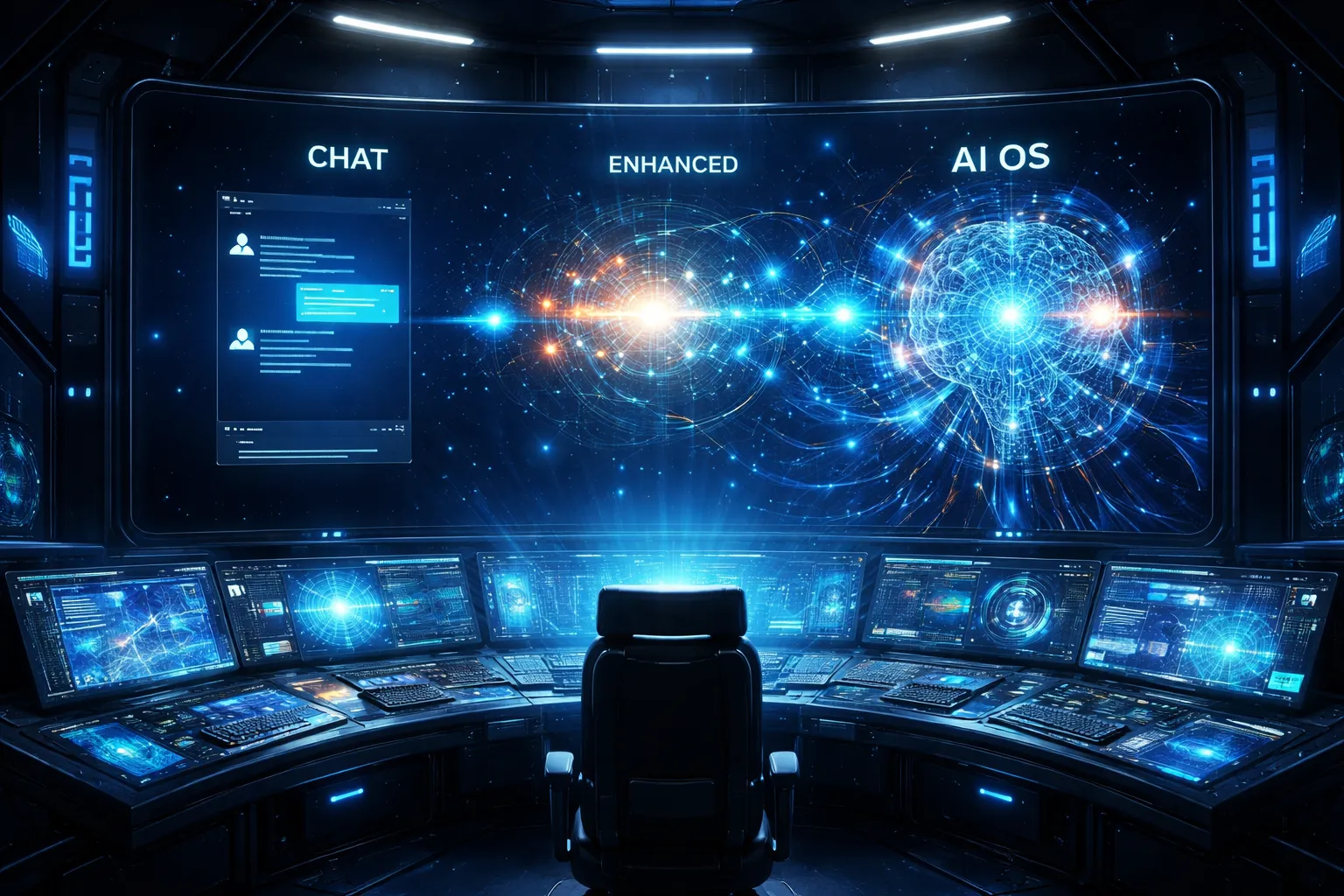
Evolution to AI OS

Interact with the slider below to see the conceptual shift.

Stateless Prompting

User inputs text → Model predicts text.
No persistent memory. No autonomous tool use.

AI Operating System

Event Trigger → Context Retrieval → Multi-Agent Routing → Tool Execution.
Continuous, stateful, and autonomous.

2. Anatomy of an Agent Runtime

An agent runtime is the core execution loop. It intercepts user intents or events, manages the context window, and orchestrates the model's reasoning cycle (e.g., ReAct: Reason + Act).
Agent Runtime Engine
1
2
3
1. Input Gateway: Normalizes incoming events (chat, webhooks, CRON).
2. Context Manager: Dynamically injects memory and tool schemas into the LLM context.
3. Execution Engine: Parses model outputs into actionable function calls.

3. Stateful Execution Pipelines

Stateless LLMs forget everything between calls. An AI OS implements stateful execution, tracking the status of long-running workflows across hours or days.

Stateful Pipeline

Click through the pipeline stages below:

Stage 1: Initialization

A workflow ID is generated. The initial state and context are written to a persistent datastore (like Redis or PostgreSQL).

Stage 2: Checkpointing

After each tool use or agent interaction, the OS updates the state. If the system crashes, it can resume exactly from this checkpoint.

Stage 3: Yield & Resume

The OS can pause execution (yield) to wait for human-in-the-loop approval, keeping the state frozen until permission is granted.

Knowledge Check

Why is "checkpointing" critical in an AI Operating System's execution pipeline?

4. Tool & Function Routing

When an agent is given dozens of tools, shoving them all into the context window causes context overflow and degrades reasoning. AI Operating Systems use semantic routing to only load necessary tool schemas.
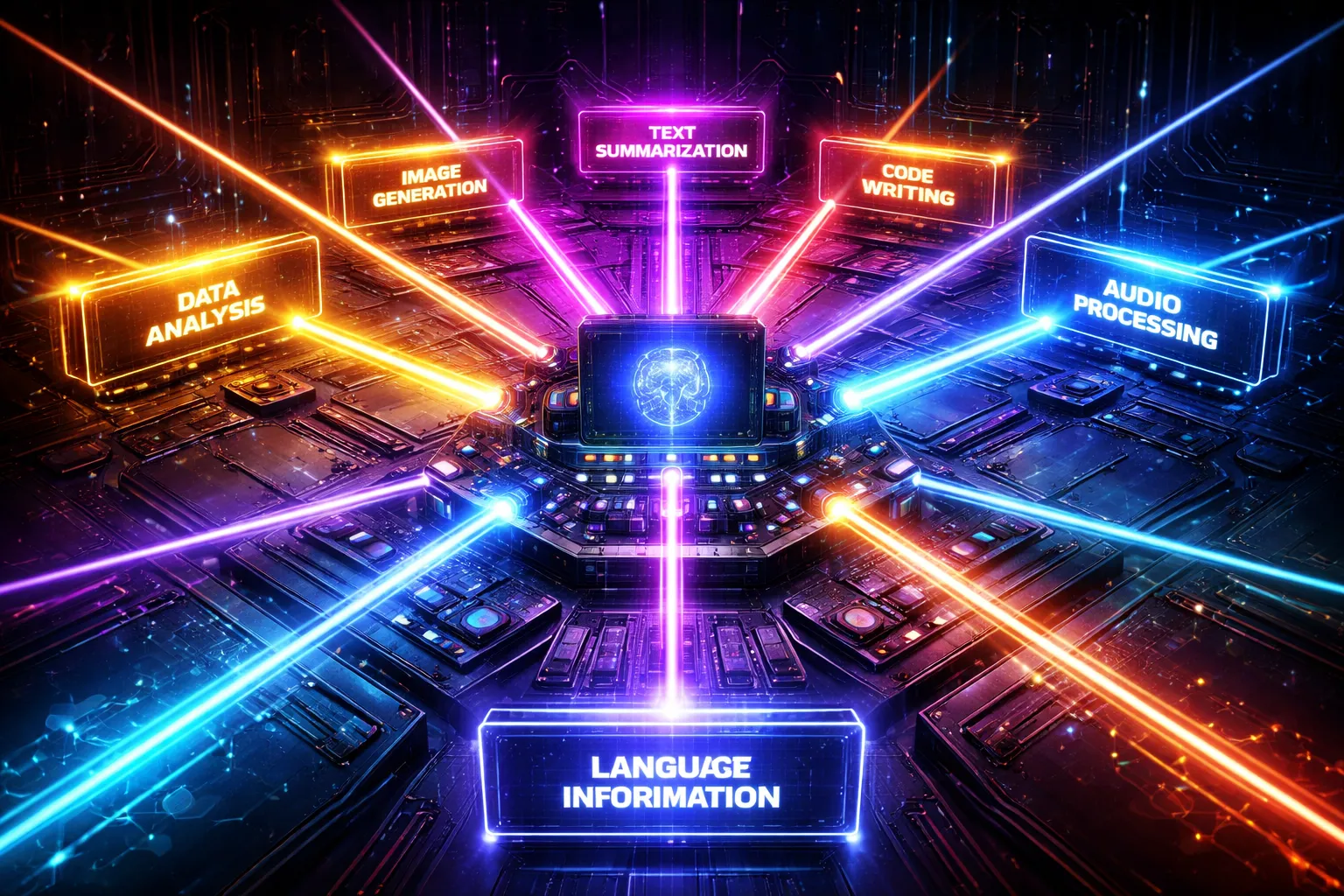
Routing Matrix

Interactive: Build the optimal routing sequence.
Click the components below to construct the routing flow in the correct order:

Sequence will appear here... (Expected: Intent → Search → Injection)

5. Model Context Protocol (MCP)

Created to solve tool fragmentation, the Model Context Protocol (MCP) standardizes how AI agents connect to external data sources. It acts like a "USB-C" cable for AI agents.

MCP Connector
The Host (e.g., Claude Desktop, AI OS): The client runs the agent. It initiates connections and requests data or tool execution from connected servers.
The Transport Layer: A standard JSON-RPC protocol over stdio or SSE. It allows the client to query resources, prompts, and tools without knowing the backend implementation.
The Integration (e.g., Notion, Github): Lightweight servers that expose specific APIs securely to the client, translating MCP requests into actual API calls.

6. Shared Memory Systems

In multi-agent ecosystems, agents must share context. AI OS memory is typically divided into three distinct layers to balance speed and persistence.

Memory Systems

Click the cards to reveal the memory layers:

Working Memory (RAM)
The current context window. Fast, highly relevant, but limited in size. Clears after the session.
Episodic Memory (DB)
A ledger of past actions, states, and decisions (e.g., Thread history in a SQL database).
Semantic Memory (Vector)
Knowledge bases and documents retrieved via RAG (Vector DBs like Pinecone).

Knowledge Check

How does the Model Context Protocol (MCP) benefit an AI Operating System?

7. Multi-Agent Coordination

Instead of one massive prompt, AI Operating Systems route tasks among specialized micro-agents. Coordination patterns define how these agents communicate.

Multi-Agent Swarm
Hierarchical (Supervisor) +

A top-level 'Supervisor' agent interprets the user prompt and delegates sub-tasks to specialized worker agents, aggregating the results.

Sequential Pipeline +

Agent A completes a task (e.g., Research) and passes the output directly to Agent B (e.g., Writer), forming a rigid assembly line.

Dynamic Swarm / P2P +

Agents broadcast intents and negotiate. If Agent A needs a calculation, it broadcasts the need, and the Math Agent dynamically responds.

8. Event-Driven Workflow Orchestration

Modern AI OS architectures use event buses. Agents do not run constantly; they wake up in response to specific system events, saving compute and enabling reactive behaviors.

Orchestration Baton

Select an event trigger to see how the OS orchestrates the response:

Email Received
DB Alert
Action: OS wakes 'Triage Agent' → Agent classifies urgency → If urgent, OS triggers 'Drafting Agent'.
Action: OS wakes 'DevOps Agent' → Agent runs diagnostic tools via MCP → OS yields for human approval before restarting servers.

9. Sandboxing & Secure Execution

When agents write and execute code (e.g., Python scripts for data analysis), they cannot run on the main OS layer. They require secure, ephemeral sandboxes.

Secure Sandbox

Hover over the sandbox environment below to activate the protective layers:

Agent Code
Ephemeral Docker Container deployed... Network access restricted... Execution isolated.

Sandboxes ensure that if an LLM hallucinates a malicious command, it only destroys a temporary container, protecting the host system.

Knowledge Check

In a hierarchical multi-agent coordination pattern, what is the primary role of the "Supervisor" agent?

10. Observability & Debugging

Autonomous agents are unpredictable. An AI OS requires deep observabilityβ€”tracing every LLM call, token usage, tool input, and latent reasoning step.
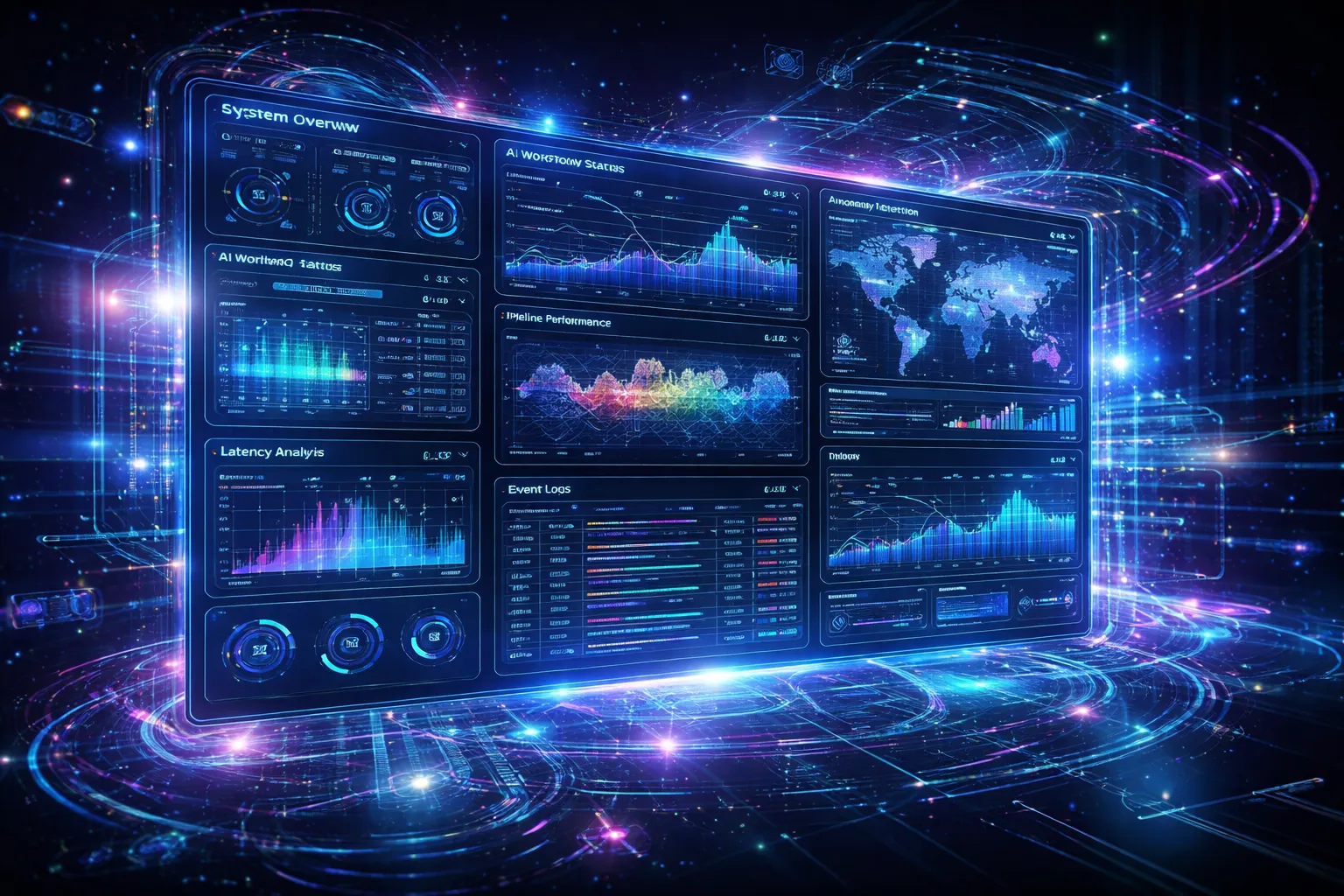
Observability Dashboard

Click to start the execution trace simulation:

0

Tokens Used

0

Tools Called

0

Latency (ms)

11. Real-World Case Study: Enterprise Agents

Consider an enterprise Customer Success team. They integrate an AI OS via MCP to Notion, Salesforce, and Slack.

Enterprise Workspace

A high-value client opens an angry ticket. What should the OS do?

Outcome: Risk! The stateless agent hallucinates a policy and angers the client further. No human-in-the-loop logic was applied.
Outcome: Success! The OS retrieves context (MCP), drafts a reply, alerts an account manager via Slack, and yields execution until the human clicks "Approve".

Summary & Key Takeaways

You've completed the tutorial phase. Let's review the critical concepts before the assessment.
  • AI Operating Systems provide deterministic scaffolding, statefulness, and routing, replacing simple stateless chat interfaces.
  • Model Context Protocol (MCP) acts as the universal standard for connecting agents to external tool servers.
  • Stateful Pipelines utilize checkpointing and yielding to manage long-running workflows and allow human-in-the-loop pauses.
  • Multi-Agent Patterns (like Hierarchical Supervisor or Swarm) distribute complex intents to specialized micro-agents.
  • Sandboxing & Observability are critical for secure code execution and tracing non-deterministic LLM behaviors.

Assessment Instructions

You are about to begin the final assessment for AI Operating Systems & Agent Ecosystems.

  • There are 5 multiple-choice questions.
  • You must select an answer before proceeding to the next question.
  • You need a score of 80% (4 out of 5) to pass and earn your certificate.
  • Your final score will be revealed at the end.

Click Next when you are ready to begin.

Question 1 of 5

What is the primary function of the Model Context Protocol (MCP) in an agent ecosystem?

Question 2 of 5

Why do AI Operating Systems implement "checkpointing" in their execution pipelines?

Question 3 of 5

In a hierarchical multi-agent setup, what is the role of the "Supervisor" agent?

Question 4 of 5

Why is "semantic routing" used instead of providing all available tools to an agent at once?

Question 5 of 5

When an agent needs to execute generated Python code, why is a "sandbox" essential?